
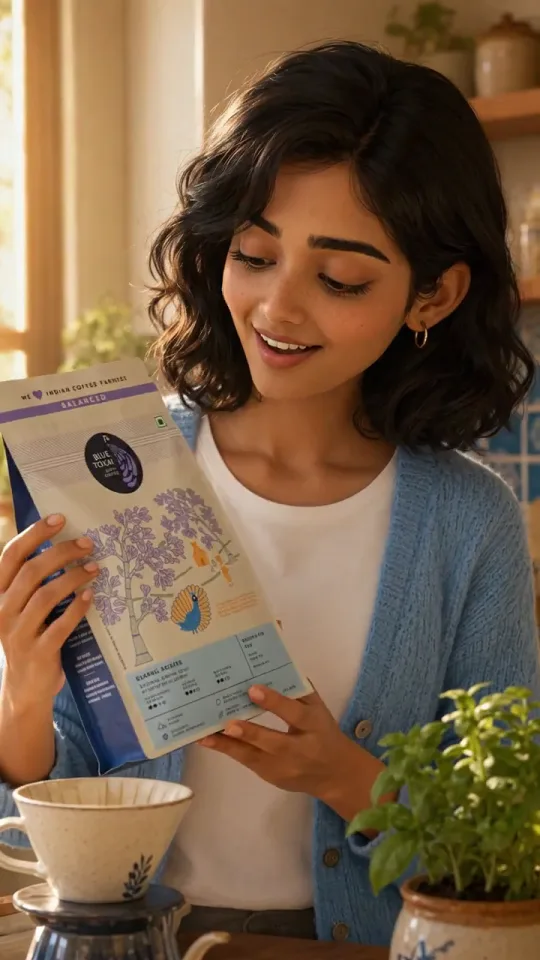

Say the word, it runs.
The skill fires on natural requests like these. No commands to memorize.
What the skill does for you.
- 1
Cast and story
The skill reads your brand and builds an original protagonist, an anthropomorphized problem, and a mechanism mascot, then writes a 4-beat script paced to time. It presents the editable cast sheet and beat map as the mandatory approval gate before spending a credit.
- 2
Storyboard stills
One expressive feature-3D still per beat with gpt-image-2, generated sequentially for character continuity: large eyes with catchlights, tactile materials, warm volumetric light, and a creamy depth of field. A weak still is re-rolled cheaply here, never repaired in video.
- 3
Animate every shot
Each approved still animates with Gemini Omni Flash at 8 seconds per shot, held short so the beat never goes static and morphs, with one clear action per clip and SFX-only audio. Seedance 2.0 is the approved fallback for a controlled end-frame transition.
- 4
Keep it original and claim-safe
Original characters and settings only, no franchise or studio logo, and the product claim stays a visual metaphor aligned to approved proof, with no medical diagnosis or guaranteed outcome.
- 5
Narrate and score
One continuous warm narrator carries all four beats and an instrumental bed sits under it, both generated in-platform and mixed over the clip SFX with sidechain ducking.
- 6
Stitch, caption, publish
The clips stitch into a roughly 32-second vertical cut, optional captions can be burned in, and the finished ad can post to a connected account.
The problem gets a face. Your product gets the ending.
Approve the cast sheet, then the storyboard. Animation, voice and score run after that.
A new cast for every brand.
No borrowed characters and no house mascot pasted onto every ad. For each brand the skill designs its own protagonist, a problem with a face and a mascot for how the product works, written from the audience and tone already in your Advibly brand. Three brands, three casts, the same four-beat shape.
- Original characters and settings only, never a franchise character or a studio logo
- Four 8-second beats: the problem, the reveal, the mascot, the call to action
- Claims stay visual metaphors tied to your approved proof, with no medical promises
Short shots, on purpose.
Each model has one job. The still carries the look: the eyes, the light, the packaging. GPT Image 2 makes every storyboard frame by default and Gemini Omni Flash only moves it, eight seconds at a time, because at ten a shot goes static and starts to morph. Ask for the newer models and the agent runs them instead: GPT Image 2.5 Sunburst for the stills, Seedance 2.5 or Gemini Omni Flash 1.1 for the shots.
- A finished vertical (9:16) 3D animated ad, roughly 32 seconds
- Four animated shots: problem hook, reveal, mascot, CTA
- An approved cast sheet and 4-beat script
- One consistent voiceover and score, mixed in
- Everything filed in your Advibly library, ready to publish
GPT Image 2.5 SunburstNewSharper stills on request, with the same cast and the same light

Nano Banana 2Swapped in for one beat when a close-up or the product keeps losing detail
GPT Image 2Feature-film 3D storyboard stills, made in order so the cast stays the same

Seedance 2.5NewThe newer motion model, used for every shot when you ask for it
Gemini Omni Flash 1.1NewThe newer Omni the agent switches to when you ask, still eight seconds with sound effects only
Gemini Omni FlashAnimates each still into an 8-second shot with sound effects only
Seedance 2.0Fallback when a shot has to land on an exact end frame

xAI TTSOne warm narrator across all four beats
MiniMax 2.6The instrumental score, mixed under the voice
Add it in seconds.
Install the skill, then make sure the Advibly MCP is connected so it has tools to call. Works with every skills-capable agent.
 Claude Code
 Claude
 Cursor
 Codex
Codex VS Code
 OpenClaw
 Hermes
 ChatGPT
Drop the .skill file into Claude → Settings → Skills, or unzip the folder into ~/.claude/skills.
npx skills add advibly/skills -s pixar-style-adWorks with Claude Code, Claude Desktop, Cursor, and any agent that supports skills. Pulls straight from GitHub.
git clone https://github.com/advibly/skills.git
cp -R skills/pixar-style-ad ~/.claude/skills/
Or in Claude Desktop: Settings → Skills → Install and select the skill folder.
The playbook.
Each skill ships with reference docs the agent loads on demand, so the craft is baked in.
cast-and-story.mdThe 4-beat arc, claim-safe mechanism choices, 8-second timing, and the approval JSON.
storyboard-prompts.mdThe style lock, beat-specific still prompt formulas, the reference chain, and still QA.
animate-prompts.mdGemini and Seedance prompt formulas, the model-selection rules, the 8-second SFX-only cadence, and clip QA.
audio-and-gotchas.mdThe voiceover voice map, the music brief, the full final-mix ffmpeg recipe, captions, and the failure-mode gotchas.
What to watch for.
- The look is original feature-film 3D animation, not a duplicate of any studio's exact signature. User shorthand like 'Pixar-style' is translated into a safe, original direction.
- Shots hold to 8 seconds. At 10 seconds the beat goes static and starts to morph.
- Character drift is fixed by regenerating the still from the identity anchor, not by adding motion.
- Hands, eyes, and label text can garble; the still is regenerated with a tight constraint rather than repaired in video.
- The narrator is one of five xAI voices, picked once and held across the whole ad.
Before you install it.
Is this made with Pixar, or does it copy Pixar characters?
Neither. “Pixar-style” is the shorthand people use for warm, big-eyed feature-film 3D animation, and that is the look the skill aims for: expressive faces, catchlights in the eyes, tactile materials, soft volumetric light. Every character and setting is original. It never uses a franchise character, an existing film world or a studio logo, and it has no affiliation with any studio.
What do I have to give the agent?
A brand that is already onboarded in Advibly and one hero product with a photo, from your catalog or an upload. For software or a service, a screen or a symbolic object stands in for the package. The skill writes the cast, the four beats and the narration from your brand context and shows you the plan before a credit is spent.
How long is the ad, and how long does it take?
Four 8-second shots, so roughly 32 seconds, vertical 9:16. You approve two things: the cast sheet with the beat map, then the storyboard stills. After that the shots, the voiceover, the score and the final mix run as background jobs and the finished ad lands in your Advibly library.
What does it cost?
The skill itself is free and open source. Running it spends your existing Advibly credits on the stills, shots, voiceover and score it generates, at no extra skill cost. It checks your balance before the animation pass and asks you to confirm before it starts.
Which agents can run it?
Any agent that supports installable skills and the Model Context Protocol: Claude Code, Claude, Cursor, Codex, VS Code, OpenClaw, Hermes and ChatGPT. Install with one npx command, then connect the Advibly MCP so the skill has tools to call.
Why does the problem become a character?
Because a problem with a face is a hook people stop for. The first beat turns what your customer is fighting into a small character with a mood, like the tired coffee mug in the Blue Tokai ad on this page. Your product arrives in beat two to change that, a friendly mascot shows how it works, and the last beat is the call to action.
Your product, starring in its own short film.
Install the skill, connect the Advibly MCP, and tell your agent which product gets the lead role.
npx skills add advibly/skills -s pixar-style-adNo terminal? Download the .skill file and drop it into Claude → Settings → Skills.
Keep building.
Vox Explainer Ads
One claim becomes a narrated paper-collage explainer, cut like a real short.
Stickman Animation Ads
A brand idea or a piece of copy becomes a visually dense stick-figure video, directed clip by clip.
Animated Explainer Videos
One topic becomes a narrated animated explainer, in any of ten visual styles.
Claymation Ads
One product becomes a warm, narrated Aardman-style stop-motion clay ad.
UGC Video Ads
One brand plus an angle becomes a finished multi-shot UGC video ad.
Video Restyle
One finished video becomes eleven completely different visual worlds.
Collage Motion Ads
Decode a reference into an editable spec, then animate assemble-from-empty motion.

Static Ads
One brand becomes a batch of static ad concepts, spread across fifteen proven layouts.