

The best AI image generator depends on the marketing job. ChatGPT Images is a strong general choice for conversational iteration and text-aware composition. Midjourney remains compelling for visual exploration. Firefly is attractive when Adobe workflow and commercial controls matter. Canva is useful when generation must move directly into a familiar layout. Google Asset Studio is built for advertisers already working inside Google Ads. Advibly is the different category choice when the job is not one image, but carrying product context across models and campaign formats.
There is no honest universal winner. This comparison separates model-level image work from the operational work of briefing, reviewing and reusing a direction.
Key Takeaways
- There is no universal winner: the right tool depends on the job in front of you, from visual exploration and text-aware editing to Adobe workflow, quick social assembly, Google Ads production, or full campaign continuity.
- The table compares documented capabilities, not scores from a controlled visual test. Use it to choose a shortlist, then compare outputs from your own briefs.
- Run the three-prompt test yourself: product fidelity, message design and campaign continuity, and score correctness before beauty rather than trusting a curated gallery.
- Advibly's category difference is not one model beating the others, it is keeping product and brand context reusable across models and campaign formats, including image ads, carousels, social posts and video concepts.
How this comparison was built
This is a comparison of documented capabilities, not a hands-on image-quality ranking. We reviewed official product information on 11 September 2026 against seven marketing criteria: instruction following, product or reference fidelity, text handling, editing control, visual exploration, commercial workflow, and reuse across a campaign. The fit recommendations are editorial judgments about those workflows, not measured quality or conversion results.
We have not run a controlled visual test across these seven tools. No example or illustration on this page is a matched benchmark. To evaluate visual quality for your product, give your shortlisted tools the same source assets and three briefs below, and record the model, date, settings, failed attempts, and unedited outputs.
Quick comparison
|
Option |
Best marketing fit |
Control advantage |
Main limitation |
|---|---|---|---|
|
ChatGPT Images |
Iterative concepts, image edits and text-aware layouts |
Conversational refinement and uploaded references |
Still requires product and claim verification |
|
Midjourney |
Visual exploration and distinctive art direction |
Editor and personalization tools |
Campaign assembly happens elsewhere |
|
Adobe Firefly |
Creative teams already working in Adobe |
Image editing, Boards, Adobe and partner models, and downstream Adobe design tools |
Value depends on the wider Adobe setup |
|
Canva |
Fast social and layout production |
Generation sits close to templates and editing |
Check AI usage allowances and whether your required edit is supported |
|
Google Asset Studio |
Google Ads asset creation and adaptation |
Direct link to advertiser assets and campaign workflow |
Primarily valuable inside Google Ads |
|
Ideogram |
Poster-like and typography-led exploration |
Text-oriented image use cases |
Check plan access to custom models, private work, and your required downstream formats |
|
Advibly |
Product-to-campaign production across models |
Reusable context, several formats and visible generation usage |
Not a substitute for original shoots or final human approval |
Pricing and access: what the bill actually represents
|
Option |
Pricing basis reviewed 11 Sep 2026 |
What to normalize |
|---|---|---|
|
ChatGPT Images |
Access and usage limits depend on the current ChatGPT plan; no fixed per-finished-ad price compared here |
Iterations, editing and whether the plan covers the team |
|
Midjourney |
Check the current subscription and generation allowance for your account; no like-for-like output quote verified here |
Fast usage, private work requirements and editor workflow |
|
Adobe Firefly |
Firefly Standard displayed at US$9.99/month with 2,000 monthly generative credits; feature/model costs differ |
Existing Adobe licenses and downstream design work |
|
Canva |
Canva Pro displayed at US$144/year for one person, billed annually; AI usage allowances apply |
Team seats, template workflow and export needs |
|
Google Asset Studio |
Available to eligible advertisers inside Google Ads |
Eligibility and campaign-specific workflow |
|
Ideogram |
Free-to-use access is documented; confirm paid plan, private work and usage allowances at purchase |
Private generation and download requirements |
|
Advibly |
Create $29/month; Publish $59/month; credit usage shown before generation |
Subscription, generation credits and campaign-format needs |
Do not compare subscription prices without comparing the finished job. A cheaper model can become expensive when the team must recreate context, move files through several tools and rebuild every format manually.
Choose by job
For broad visual exploration
Midjourney is a natural short-list candidate when the team needs many art directions quickly. The question is what happens after selection: product accuracy, copy, layout and channel adaptations still need a controlled path.
For iterative editing and text-aware composition
OpenAI's current guidance emphasizes descriptive prompting, uploaded image references, iterative refinement and text or infographic use cases. That makes ChatGPT Images useful when the operator wants to converse through changes rather than restart the prompt.
For an established creative department
Firefly belongs on the shortlist when the team already relies on Adobe tools and wants generation close to existing production and asset workflows. Judge the whole workflow, not the model demo.
For quick social assembly
Canva is useful when the generated element must immediately become a familiar post, story or presentation layout. It is often the assembly environment as much as the generator.
For Google advertising assets
Google Asset Studio can generate and edit images, create product imagery, resize assets, build video and share previews inside the advertiser workflow. Google also requires the advertiser to review accuracy and policy compliance.
For typography-led image work
Include Ideogram when the image needs an exact headline, poster layout, or branded type treatment. Its documentation covers text rendering, background control, custom models, and MCP access. Treat that as a reason to test your exact words and reference assets—not a promise that every generated label will be correct.
For repeatable multi-format campaigns
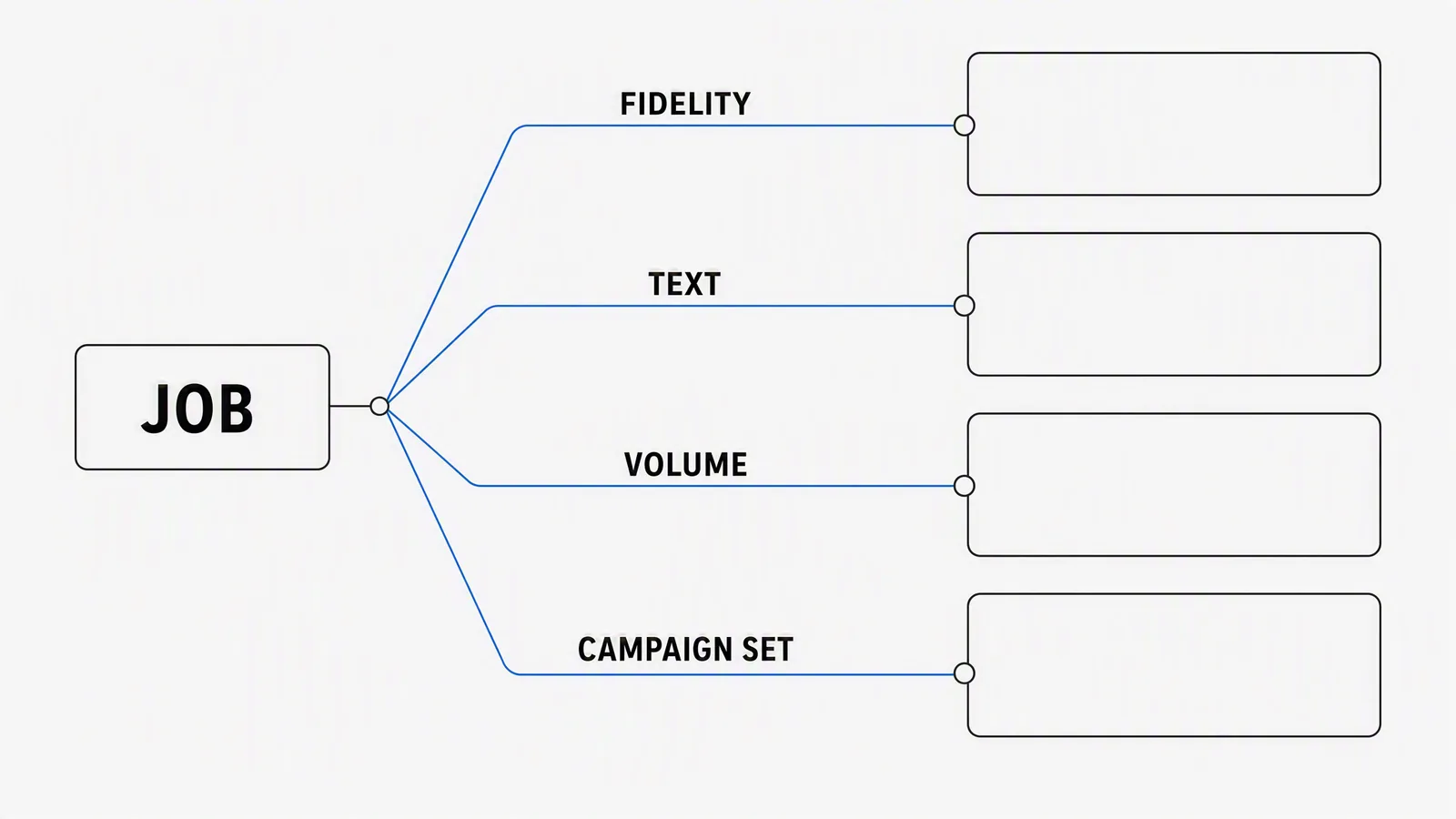
Advibly is relevant when the team wants to keep product and brand sources available, select among different models, and carry one approved direction into image ads, carousels, social posts and video concepts. It solves orchestration around models rather than claiming one underlying model always wins.
A three-prompt test any buyer can run
- Product fidelity: use an owned product image and require an environmental change without altering shape, label or count.
- Message design: request a simple ad layout with one exact headline and clear negative space.
- Campaign continuity: adapt the approved concept into square, vertical and story-led variations without changing the proposition.
Score every output for correctness before beauty. Record failed attempts and human repair time. That produces a more useful buying decision than a curated gallery.
Verdict
If you want one model for exploratory image work, shortlist ChatGPT Images, Midjourney and Firefly according to your preferred editing environment and visual job. If you need rapid social assembly, include Canva. If you work primarily inside Google Ads, test Asset Studio. If the bottleneck is carrying product truth through several models and campaign formats, evaluate Advibly as the workflow layer.
Compare models inside a product-to-campaign workflow with Advibly.
Sources
- OpenAI: Creating images with ChatGPT, accessed 11 September 2026.
- Midjourney Editor and Personalization, accessed 11 September 2026.
- Adobe Firefly, accessed 11 September 2026.
- Canva pricing, accessed 11 September 2026.
- Google Asset Studio, accessed 11 September 2026.
- Advibly pricing, checked 11 September 2026. Prices and usage allowances can change.
Ideogram: official product and workflow documentation, accessed 11 September 2026.